The Algorithmic Smear: How Broken AI Detectors Are Poisoning Independent Transmedia IP
The software cannot tell the difference between twenty hours of manual Photoshop brushwork and a five-second prompt string. It simply measures mathematical variance, encounters a saturated palette, and defames the artist.
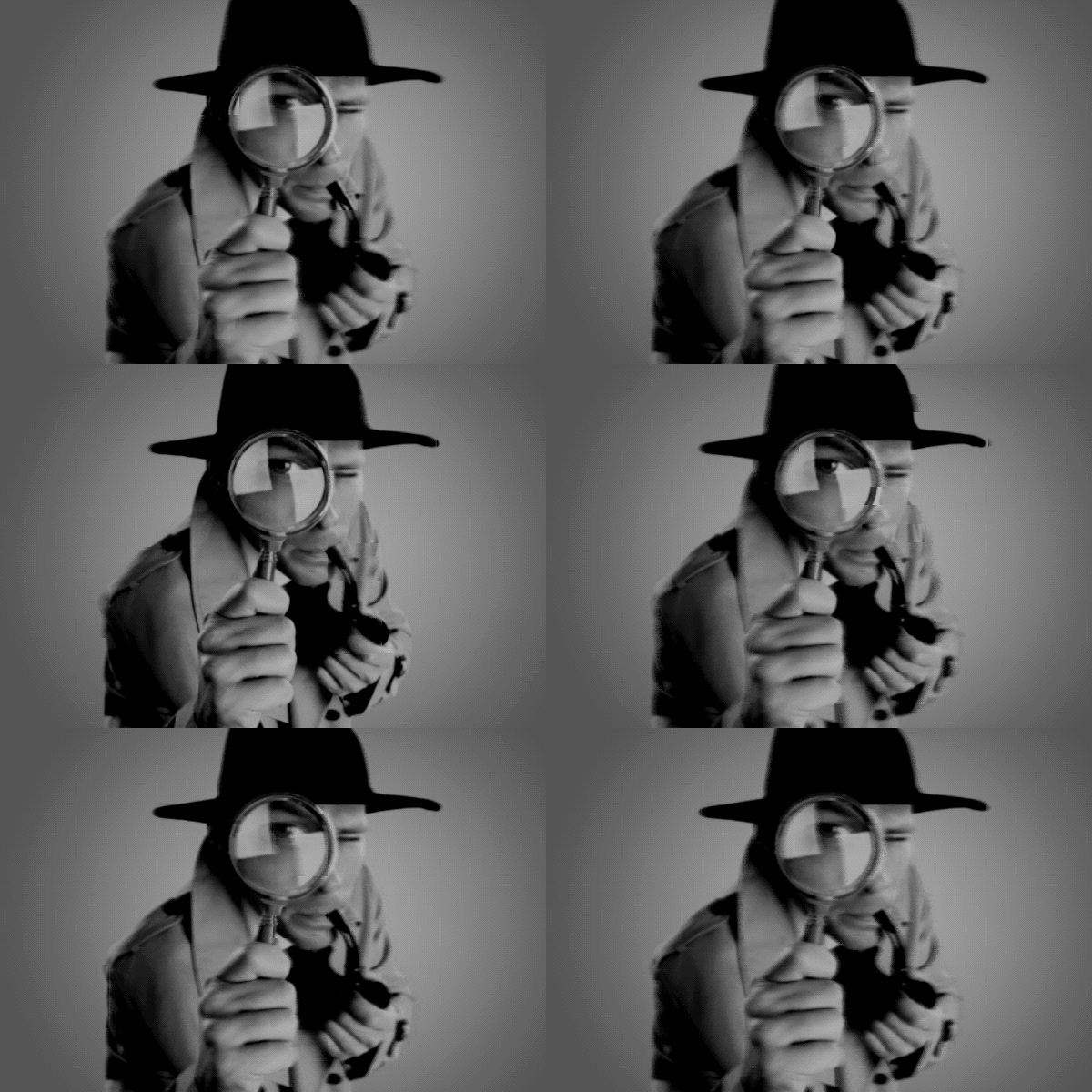
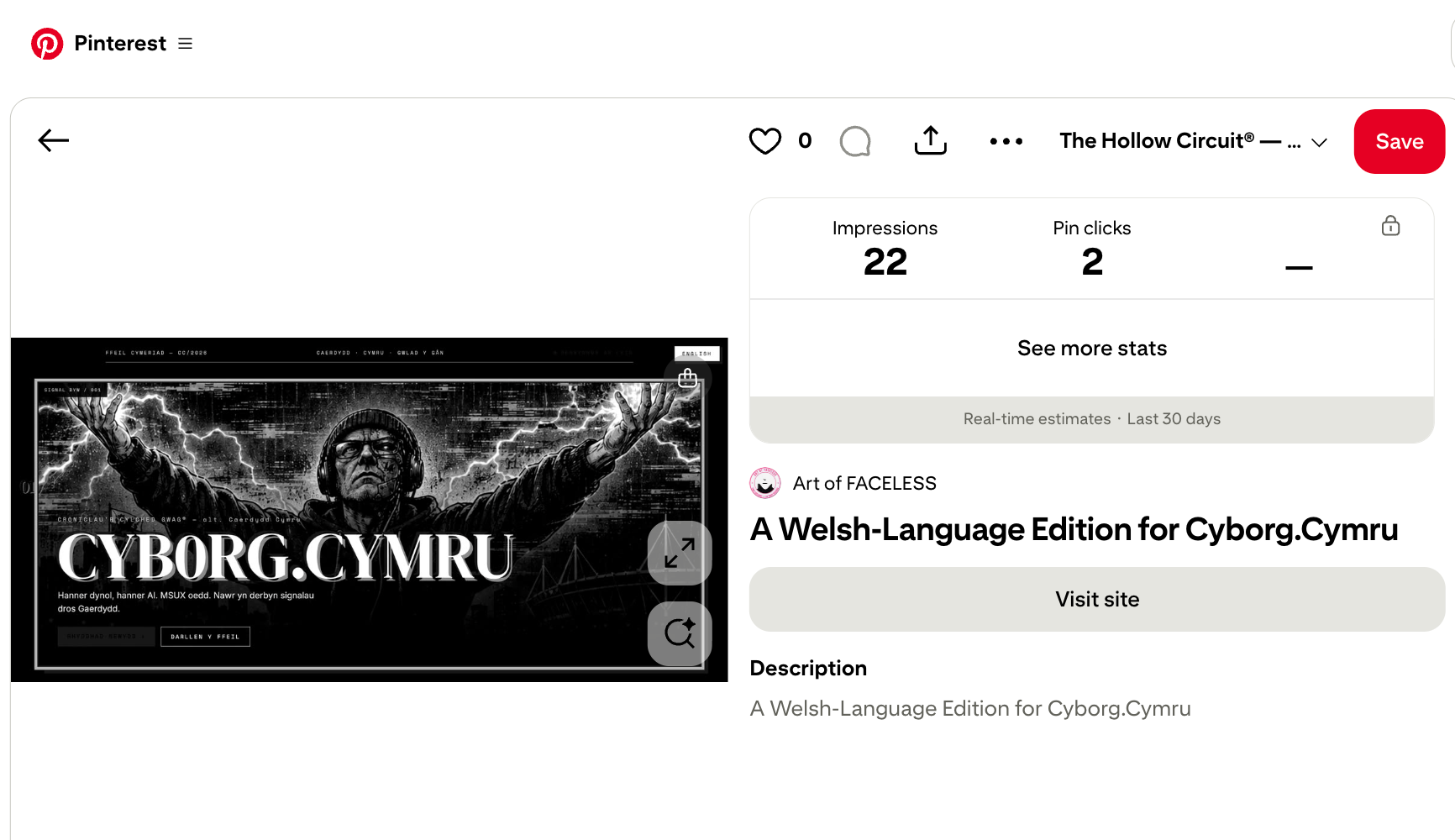
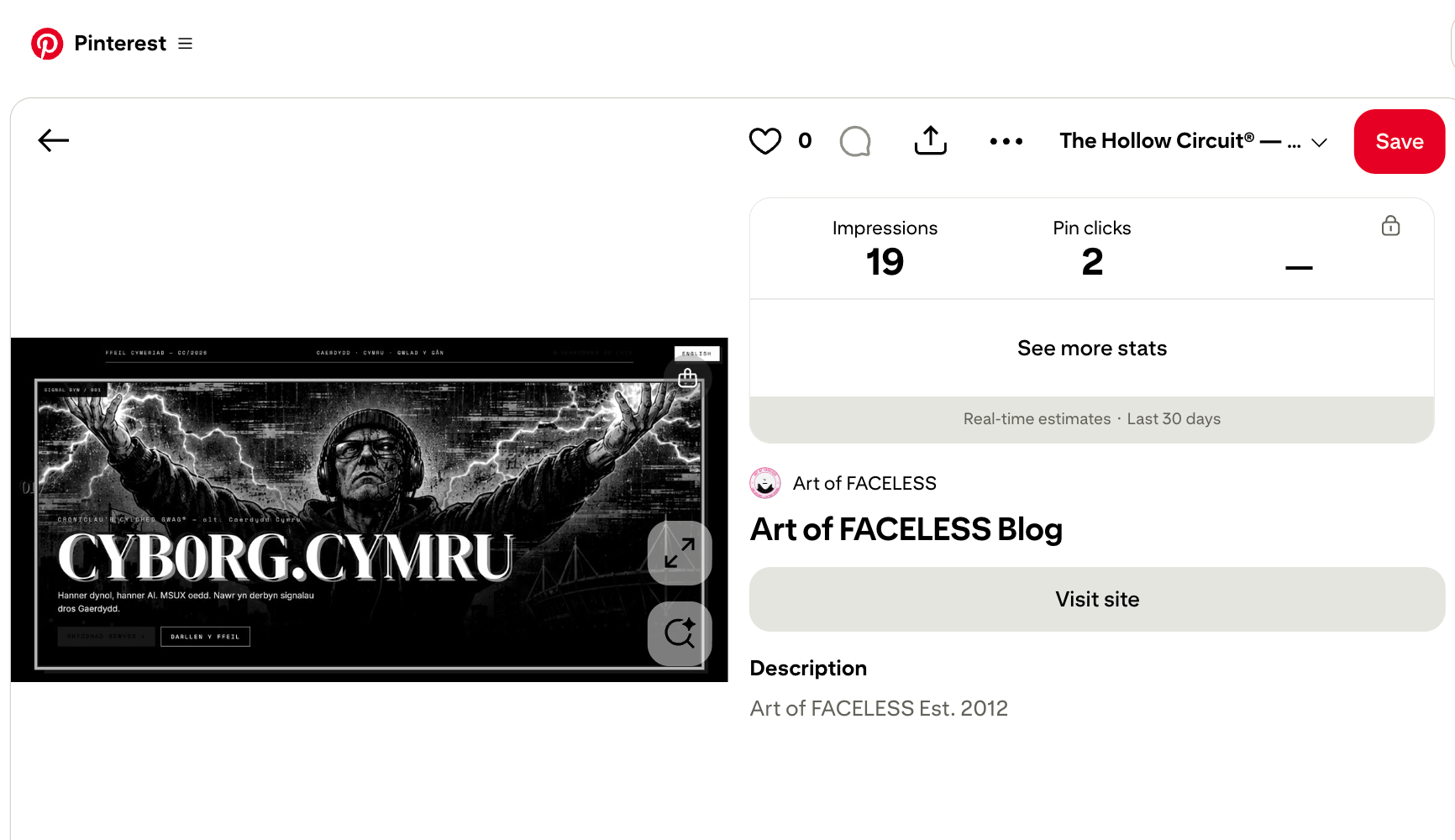
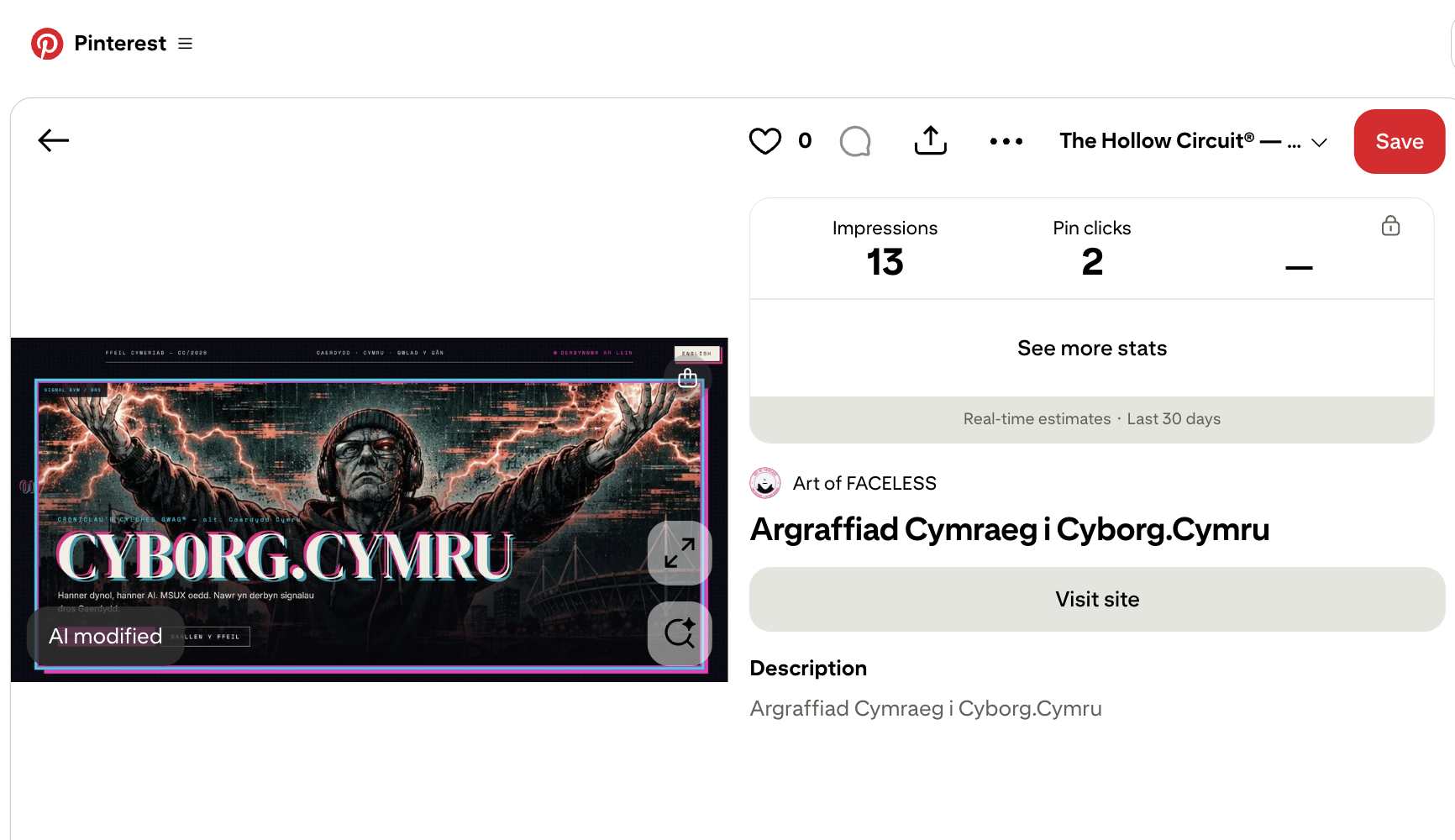
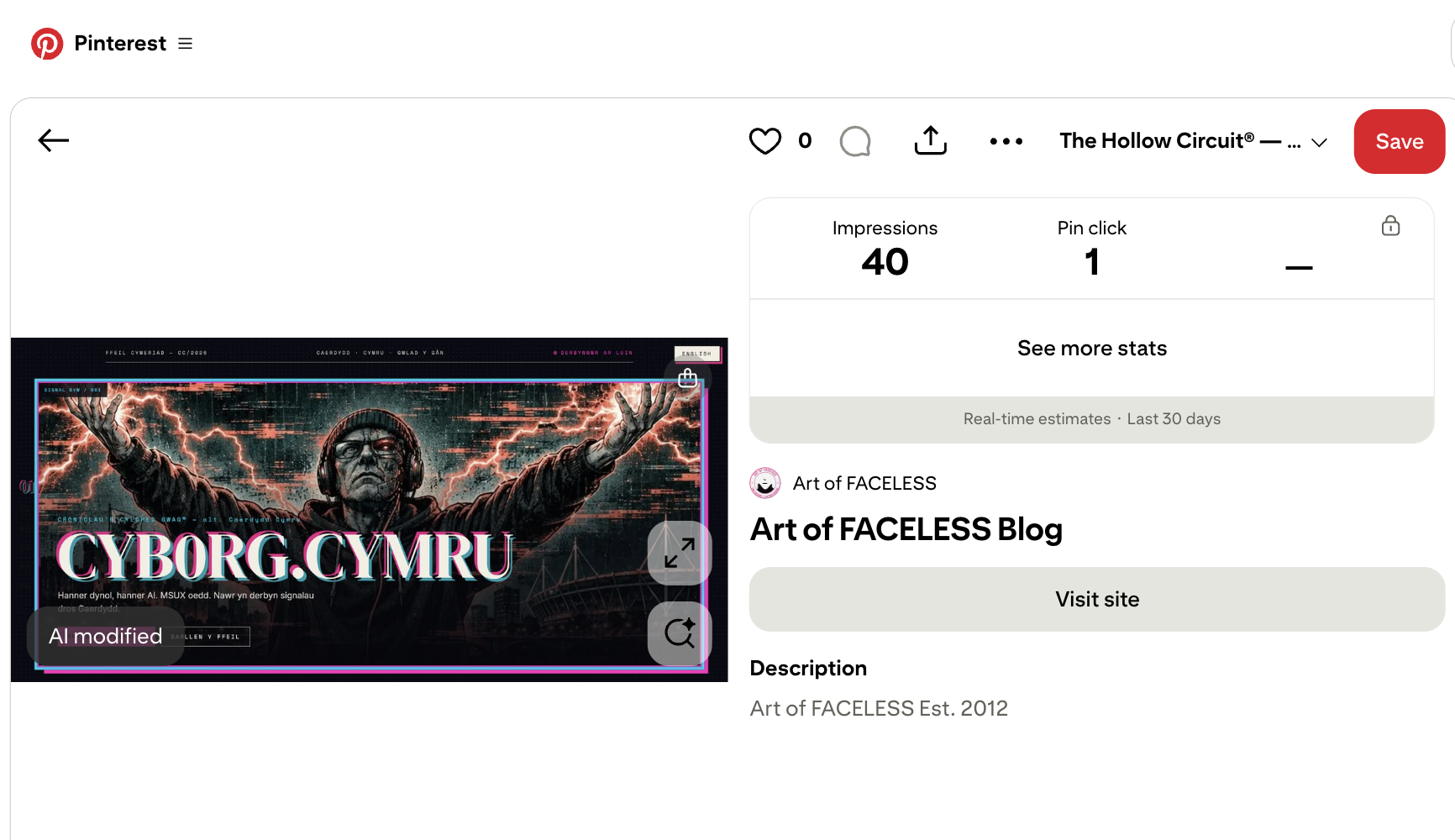
Four image exports. One master Adobe Photoshop document built stroke-by-stroke with layered digital montage and a stylus on a graphics tablet.
Upload the monochrome black-and-white cuts to Pinterest, and the platform ingests them without friction. But upload the same compositions graded with our trademarked biopunk brand palette — anchored by deep teal shadows (#030E0F), vibrant teal-cyan (#265358), and electric coral-salmon highlights (#C5665B) — and the platform’s automated moderation slaps a scarlet letter across the canvas: “AI modified.”
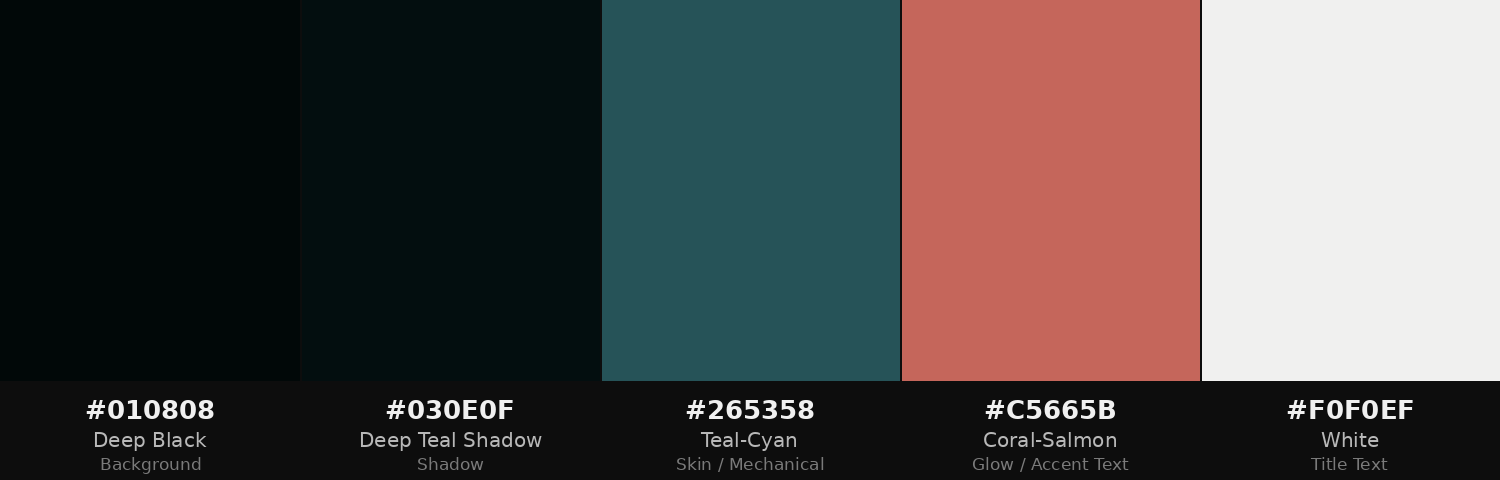
INPUT: Hand-crafted layered montage (Photoshop / Pen Display).
TEST 1 (Monochrome): Clean pass. No badge.
TEST 2 (Brand Swatch #C5665B / #265358): Flagged as AI MODIFIED.
This is not an isolated glitch or a harmless software hiccup. It is an algorithmic smear. When an independent transmedia studio spends years developing, printing, and legally registering a trademarked intellectual property — such as The Hollow Circuit® — having commercial assets publicly branded as machine-generated undermines creator integrity, confuses readers, and damages brand equity.

The Junk Science of Pixel Probabilities
Platform tech stacks rely on a lethal combination of unvalidated machine-learning classifiers and aggressive heuristics. Unlike provenance standards (such as C2PA Content Credentials) that track a cryptographic chain of custody, visual AI classifiers don't know where an image originated. They are probabilistic engines trained to recognise statistical artefacts, noise residuals, and high-frequency pixel distributions.
The moment an artist applies an aggressive, stylised dual-tone palette — such as teal and coral against ink-dense blacks — the software misfires. Generative diffusion models (Midjourney, Stable Diffusion, DALL-E) notoriously over-index on complementary neon lighting, lens bloom, and high-saturation atmospheric glows. Consequently, platform classifiers have baked that correlation into their models. If your human hand paints with the vibrant colour profiles currently popularised by neural synthesis, the machine presumes guilt.
Independent academic research and forensic audits continue to expose the catastrophic error rates of these classifiers. In a benchmark study on AI detection reliability by researchers at Stanford University (Liang et al., 2023), automated detection systems exhibited severe false-positive biases, particularly penalising non-standard structural inputs. In forensic imaging benchmarks, visual classifiers regularly return false-positive rates upwards of 30% when assessing complex, contrast-heavy, human-made illustrations and digital paintings.
The software cannot tell the difference between twenty hours of manual Photoshop brushwork and a five-second prompt string. It simply measures mathematical variance, encounters a saturated palette, and defames the artist.
“Detectors are probabilistic classifiers that judge an image by pixel statistics, not by provenance. A human using complementary high-contrast grading produces spectral frequencies identical to a neural network’s training bias.”
The Disproportionate Toll on Indie Creators
For corporate conglomerates with dedicated legal and PR wings, disputing platform flags is trivial overhead. For an independent studio run by disabled artists, time and physical capacity are finite and critical resources. Every hour squandered navigating opaque, automated appeal forms — only to receive canned replies stating, “We’re working on ways to improve accuracy”— is an hour stolen from narrative writing, score composition, print production, and physical distribution.
This is an unacknowledged accessibility tax. Big Tech rushes half-baked compliance filters into production to satisfy regulatory optics (such as compliance provisions under the EU AI Act) and placate backlash against generative spam. But instead of filtering low-effort automated scrapers, they pass the enforcement burden onto working creators.
We are left trapped in an automated panopticon:
- Algorithmic Disenfranchisement: The “AI modified” flag devalues the artwork in public perception, triggering organic distrust among grassroots audiences who rightly reject uncredited generative harvesting.
- IP Dilution: Trademarks and visual identifiers established across physical books, zines, and web portals are stripped of their artistic pedigree by third-party metadata flags that cannot be turned off.
- No Redress: There is no human arbiter on the other end of the wire. The appeal button is an echo chamber.
PROVENANCE OVER PROBABILITIES
If a platform cannot prove synthetic generation via cryptographic provenance, it has no legal or ethical right to label an independent artist’s work as synthetic.
End the Black-Box Guesswork
The tech industry’s current approach to AI moderation is fundamentally broken. Slapping crude, probabilistic warning badges onto genuine digital art does not clean up platforms; it actively punishes artists who develop sharp, idiosyncratic visual identities.
If platforms cannot verify creation history through transparent cryptographic standards or direct file inspection, they must halt the deployment of automated guesswork. Until then, independent studios will continue to call out this charade: our craft is not your training data, and our palette is not your false positive.
References
- Liang, W., Yuksekgonul, M., Mao, Y., Wu, E., & Zou, J. (2023). GPT detectors are biased against non-native English writers / Algorithmic Fragility in Synthetic Media Detection. Stanford Machine Learning Group.
- Content Authenticity Initiative (CAI) & C2PA. (2024–2026). Content Credentials Architecture Specifications: The Critical Divergence Between Provenance Metadata and Heuristic Visual Detection.
- Lumethic Imaging Forensics. (2026). The False Positive Problem: Why Probabilistic Classifiers Flag Authentic Human Artwork and Photography.
Founding editorialRead this first
No Face. No Performance. No Proof Required.
Punk publishing, run by disabled people. We won't show our face, perform our disability or justify our wheelchair, whatever it's made of. Everything we publish comes back to this.