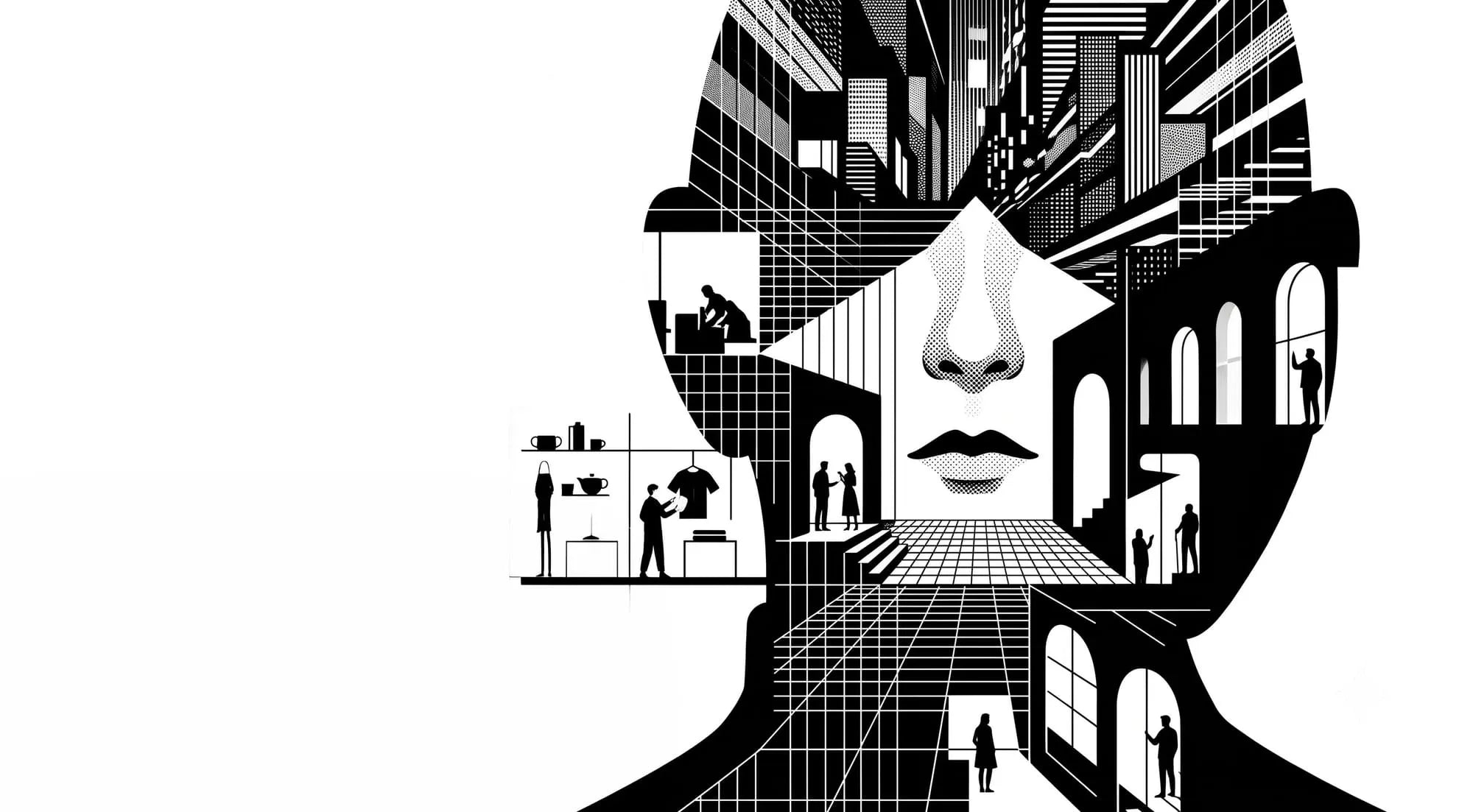
Parliament Just Caught Up With What We've Said For Over A Decade
myfacebelongsto.me has spent fourteen years arguing a single, unmoving position: facelessness is not disappearance; it's sovereignty. The right to choose when and how your image enters a machine system. Anonymity is the absence of a name; facelessness is the presence of a choice.

An Art of FACELESS editorial. Filed under myfacebelongsto.me, in defence of the Manifesto of Facelessness (2025) and the Manifesto of Sovereign Broadcast (2026).
The Guardian reported today that a cross-party joint committee on human rights — MPs and Lords, no less — has finally worked out what we've been saying since before most of them knew what a GPU was: the law is not fit for purpose, AI poses a real threat to human rights, and among the named threats sit two we have built an entire fourteen-year archive around — public face-scanning and explicit deepfakes.
Good. Welcome to the party. We kept the manifesto warm for you.
Deepfakes aren't new. Your outrage is.
Read the piece properly, and you'll notice the sleight of hand buried in the framing: this is written as a fresh crisis, a "series of safety incidents," a sudden dawning. It isn't. Non-consensual deepfakes have existed for years — explicit, weaponised, distributed at scale — while every government that could have acted chose instead to sit on its hands, dazzled, in thrall to the same Big Tech firms it was supposedly regulating. Alex Sobel's committee calling this "potentially dire" in 2026 is not prophecy. It's a very, very late invoice for a bill that's been accumulating since the mid-2010s. My Face Belongs to Me was built on exactly that premise: your image, once captured, is a non-revocable asset, and the institutions meant to protect it have spent a decade choosing comfort with power over protection of people.
So no, we won't be applauding a committee for noticing a fire we've been pointing at for fourteen years. We'll take the legislation. We won't take the pretence that this is news.
Do not confuse this with the other fight
Before anyone tries to fold this into a different argument: our position on deepfakes, face-scanning, and biometric theft is not the same fight as our defence of disabled people's right not to be targeted with hate. That's a separate, non-negotiable red line — Ableist Purity gets named as discrimination, full stop, no both-sidesing, and it does not get diluted by being bundled into a general "AI harms" conversation. Keep them distinct. We do.
Meta Glasses didn't invent the theft. They just made you watch it happen.
Here's where we get forceful, because this is the part the current news cycle keeps getting backwards.
Meta Glasses are, right now, the visible target — the thing people can point a camera-shaped object at and feel afraid of. And fine: if a pair of glasses recording strangers' faces in real time is what finally makes the general public flinch at biometric capture, we'll take that too. Late is still better than never. If wearing a camera on your face is what it takes for people to viscerally understand what facial recognition has been doing to them silently for a decade, then good — let them be uncomfortable. That discomfort is the whole argument we've been making since before Meta Glasses existed.
But look at what's actually happening while everyone stares at the glasses: the same public uploading images of other people's faces to Instagram, X, TikTok and Facebook, every single day, with zero meaningful consent architecture, zero verification that the subject agreed to it, and zero restriction on what happens to that image once it's ingested into a model. Meta Glasses did not invent non-consensual image capture. They just made it visible and personal enough to be frightening. The platforms have been doing the identical thing at planetary scale, silently, for over a decade, and they are not the ones currently being dragged in front of select committees.
That is a targeting failure, and it's not an accident. A pair of glasses is a photogenic villain — small, wearable, individual, easy to legislate against, easy to run a headline on. A platform's upload pipeline is infrastructural, boring, and load-bearing for the entire advertising economy. Governments will regulate the wearable before they touch the pipeline, because the pipeline is where the money is. That is precisely the dynamic our Manifesto of Sovereign Broadcast named directly: we are not AI, and we do not feed the machine — but the machine is still being fed, daily, by exactly the platforms currently escaping scrutiny while a device gets the headlines.
If the JCHR wants a real target: it isn't the glasses. It's every social platform with an upload button and no consent gate.
What we've argued since before this was fashionable
myfacebelongsto.me has spent fourteen years arguing a single, unmoving position: facelessness is not disappearance; it's sovereignty. The right to choose when and how your image enters a machine system. Anonymity is the absence of a name; facelessness is the presence of a choice. That distinction is the entire spine of the Manifesto of Facelessness, and it's the reason we can say, calmly and without contradiction, that we welcome this committee's report while refusing to treat it as revelation.
"Facelessness is Freedom. Nothing About Us Without Us." That's not a slogan we reach for when it's convenient. It's the standard we're holding this report to — and it's the standard the report itself falls short of, because nowhere in the coverage is there a serious reckoning with the platforms that made the glasses controversy possible in the first place. Regulate the wearable if you must. But if the AI Bill that comes out of this doesn't touch the upload pipeline, every platform runs unrestricted, it will have legislated the symptom and left the disease licensed to trade.
We'll be here when the next report catches up. We usually are.
— Art of FACELESS
myfacebelongsto.me · The Manifesto of Facelessness (2025) · The Manifesto of Sovereign Broadcast (2026)