
The Economics of Survival: Integrating AI into the Commercial Creative Studio
Now is the time to act. Do not put off auditing your studio's workflows. Assess where you're losing time, integrate automated pipelines to reduce friction, and restructure your product offerings to reflect market realities.
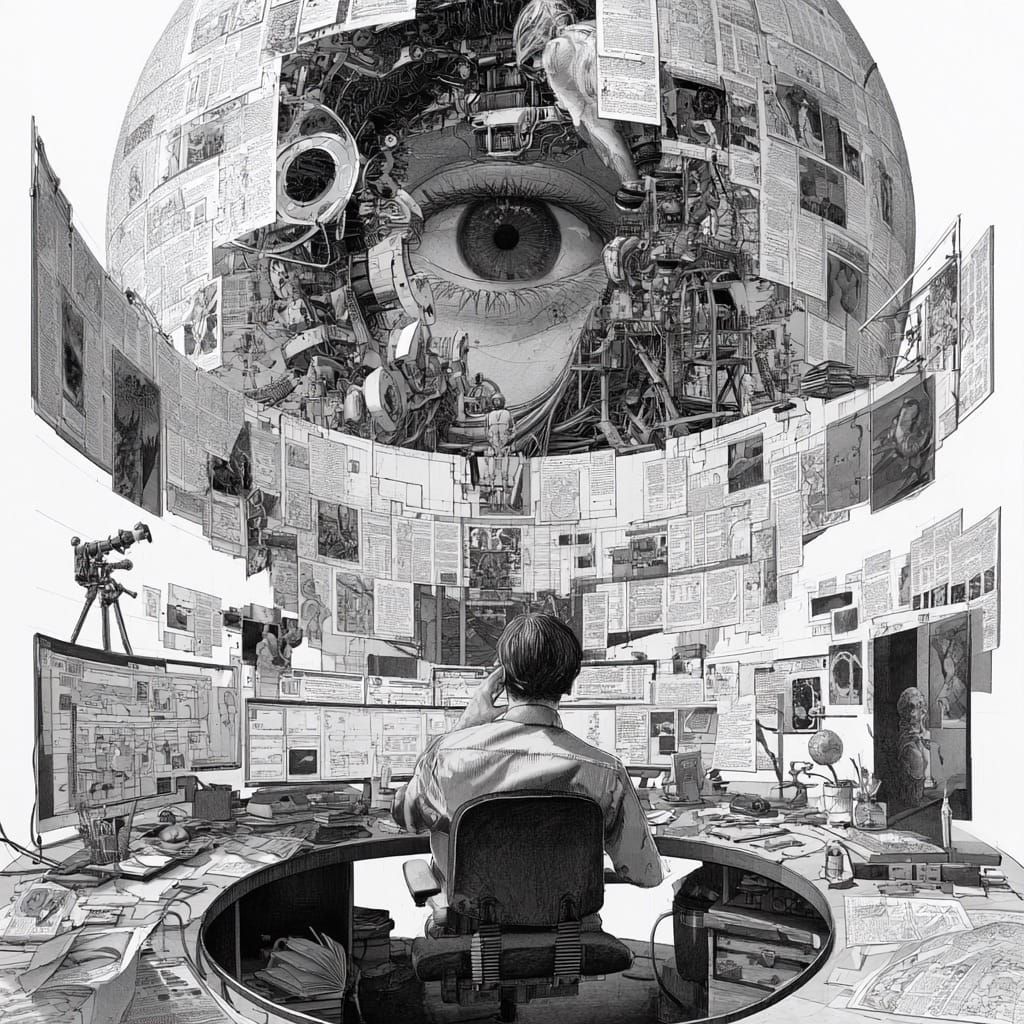
The Economics
of Survival
Integrating AI into the commercial creative studio — a pragmatic guide for 2026.
For the working professional, the debate surrounding artificial intelligence is largely over. It is no longer a philosophical exercise; it is a fundamental economic reality. When your livelihood depends entirely on the commercial viability of your creative output, the luxury of ideological purity is the first casualty.
Throughout history, early adoption of technology has been the defining factor in professional survival. The transition from the darkroom to the digital sensor, the shift from analogue paste-ups to Adobe Photoshop, and the move from paper drafting to the iPad all fundamentally altered the creative economy. In none of these instances was holding onto the past a sustainable business model. Today, refusing to integrate automated systems into your workflow is akin to insisting on hand-weaving textiles during the height of the Industrial Revolution.
The following is a pragmatic guide for serious, full-time creatives on how to navigate, integrate, and monetise AI within a commercial studio setting in 2026.
01 // Reality CheckThe Commercial Reality vs. The Hobbyist Ideal
It is vital to draw a distinct line between hobbyist artists — those who create for pleasure or have supplementary income — and professional creatives who must support themselves through their craft. Often, the loudest voices demanding purely "human-made" art belong to those who do not have to balance a studio's books at the end of the month.
They do not face the non-negotiable time constraints of client deliverables, nor do they understand the term "art" in its strict commercial sense: a product that must be sold to a market. Graphic design, photography, audio production, and independent publishing have changed forever. The internet and the smartphone recalibrated consumer expectations, and AI is simply the latest structural shift. Ignoring it will not make it go away; it will only make your studio obsolete.
02 // No BinaryThe Myth of the Binary Choice
There is a persistent, yet entirely false, notion that a workflow must be either 100% human or 100% automated. In a modern studio, there is no binary decision.
Virtually every piece of software used today — from advanced digital audio workstations to graphic design suites and 3D rendering engines — has been touched and optimised by AI pipelines. Attempting to extract algorithmic assistance from your process is not only futile, but it also actively damages your profit margins.
The key to longevity is the deliberate splitting of human-based skills and automated systems. Foundational knowledge — understanding composition, typography, audio mixing, and narrative structure — remains your greatest asset. However, relying on manual execution for every step of a project is a guaranteed path to financial failure. The goal is to transfer your existing expertise into a directorial role, using automated tools to execute the heavy lifting.
03 // Productise ItActionable Strategy: The Variable Workflow Model
The most effective way to implement AI in a client-facing or commercial product setting is to stop hiding it and start structuring it. Rather than fighting the technology, productise it. Offer clients a variable product range based on the percentage of AI input versus manual human craft — transparent, tiered pricing that caters to different budgets and timelines while keeping you in control of the economics. Select a tier below.
Rapid Deployment
High AI / Low Touch
85% / 15% · illustrative
Heavily reliant on AI generation, automated formatting, and algorithmic processing.
Fast, cost-effective, highly efficient — tight deadlines, initial pitches, background assets, high-volume budget work.
Lower human hours, even on a lower invoice.
Hybrid Pipeline
Balanced Input
50% / 50% · illustrative
AI generates the foundation, stems, or wireframes — then significantly reworked, painted over, or remixed by hand.
A polished, professional product where the automated origins are invisible, elevated by human taste and skill.
Professional rate, roughly half the production time.
Bespoke Craft
Low AI / High Touch
10% / 90% · illustrative
Traditional digital or physical workflows. AI relegated strictly to background tasks — file management, noise reduction, formatting.
Premium, highly specific, and artisanal.
Billed to compensate for intensive human hours.
By categorising output this way, you remove the stigma of automation and frame it as a benefit to the client's budget and timeline.
04 // Non-NegotiableThe Imperative of Human Oversight
The implementation of a variable workflow does not abdicate you of responsibility; it demands a higher level of scrutiny. Oversight of the finished outcome must remain strictly human.
VERIFIED
Automated workflows are highly efficient, but prone to generating generic, sterile, or fundamentally flawed material. If the pipeline produces an inferior product, it is your responsibility to recognise it and correct it. Your value in the marketplace is no longer just your ability to physically create a piece of media — it is your discerning eye, your editorial rigour, and your ability to curate sprawling transmedia projects into a cohesive, impactful vision.
05 // OutlookThe Next Industrial Revolution
We are currently navigating another industrial revolution. The romanticised vision of "hand-made everything" died centuries ago for a reason: it could not scale.
Retraining and transferring skills is not a sign of defeat; it is the hallmark of a seasoned professional. The skills you learned in the darkroom or the traditional design studio are not obsolete — they are the very foundation that allows you to direct automated tools better than a novice ever could.
Now is the time to act. Do not put off auditing your studio's workflows. Assess where time is being lost, integrate automated pipelines to handle the friction, and restructure your product offerings to reflect the realities of the market.
Survival has never been about resisting the tide — it has always been about learning how to build a better ship.
— // AOF — SIGNAL ENDS // —